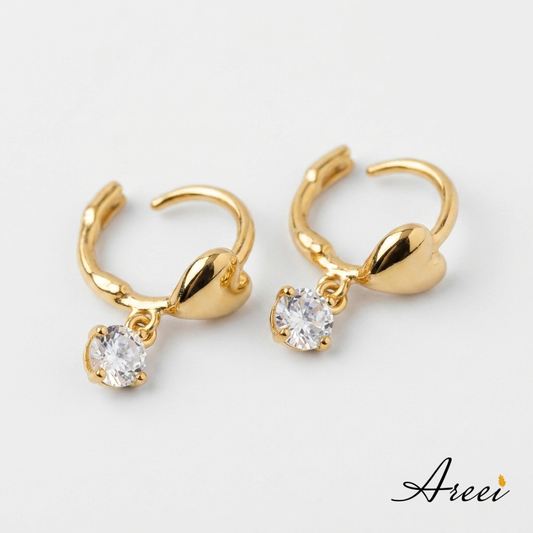
Moissanite has gone from a rare curiosity found in a meteor crater to one of the most talked about gemstones in modern jewellery. If you have been wondering what a moissanite actually is, whether it is a "real" gemstone, and how it measures up against a diamond, this guide answers every question in plain English.
What Is Moissanite?
Moissanite is a gemstone made of silicon carbide, a compound of silicon and carbon. In its gem quality form it is colourless, brilliant and remarkably tough, which is why it is now one of the most popular diamond alternatives in the world.
The name is pronounced "MOY-sun-ite". You will also see it written as "moissanite stone", "moissanite gem" or simply "moissy" by enthusiasts. Whatever the label, the stone is the same: a durable, fiery gem that looks beautiful in engagement rings, earrings, pendants and bracelets.
Where Does Moissanite Come From?
The story begins in 1893. French chemist Dr Henri Moissan was examining rock samples from a meteor crater in Arizona when he noticed tiny, sparkling crystals. He first believed they were diamonds. After further study he realised they were silicon carbide, a mineral that was almost unknown on Earth at the time.
The mineral was later named moissanite in his honour. Natural moissanite is extraordinarily rare. It has been found in meteorites and in a few deep earth deposits, but never in sizes or quantities that could support a jewellery industry.
That changed when scientists worked out how to grow silicon carbide crystals in a controlled laboratory environment. By the late 1990s, gem quality lab grown moissanite became commercially available, and it has been growing in popularity ever since. Today, virtually every moissanite in a jewellery shop is created in a lab.
What Is Moissanite Made Of?
Moissanite is made of silicon carbide, often written as SiC. Each crystal is built from silicon and carbon atoms bonded in a tightly packed structure. This structure is what gives the stone its extreme hardness, its heat resistance and its dazzling light performance.
To make a gem, specialists grow a single crystal of silicon carbide under high temperatures over several weeks. The finished crystal is then cut and polished into familiar shapes such as round brilliant, oval, pear, princess and cushion.
Is Moissanite a Real Gemstone?
Yes. Moissanite is a genuine gemstone with its own distinct chemical composition and physical properties. It is not glass, it is not cubic zirconia and it is not a "fake diamond". It is its own mineral.
It is worth separating two ideas that are often confused:
- Natural versus lab grown: The moissanite in jewellery is lab grown, but it is chemically identical to the natural mineral.
- Moissanite versus diamond: Moissanite is not a diamond. A diamond is pure carbon, while moissanite is silicon carbide. Moissanite is a different gem that happens to look similar to a diamond.
So if you are asking "is moissanite a real diamond?", the honest answer is no, but it is a real, valuable and beautiful gemstone in its own right.
Moissanite vs Diamond: The Key Differences
Many shoppers come across moissanite while researching diamonds, so a side by side comparison is helpful.
|
Feature |
Moissanite |
Diamond |
|
Composition |
Silicon carbide |
Pure carbon |
|
Hardness (Mohs scale) |
About 9.25 |
10 |
|
Refractive index |
About 2.65 to 2.69 |
About 2.42 |
|
Dispersion (fire) |
About 0.104 |
About 0.044 |
|
Typical price |
A fraction of a diamond |
Considerably higher |
|
Origin in jewellery |
Lab grown |
Mined or lab grown |
|
Weight for the same size |
Lighter |
Heavier |
What this means in practice:
- Moissanite shows more "fire", which is the rainbow flashes of colour you see when light moves through the stone.
- Diamond is a little harder, but moissanite is still tough enough for daily wear.
- Because moissanite is lighter, it is usually described by its millimetre diameter or by "diamond equivalent weight" rather than true carat weight.
- The price difference is significant, which means you can choose a larger stone or a more elaborate design for the same budget.
How Hard and Durable Is Moissanite?
Moissanite scores around 9.25 on the Mohs scale of hardness. Only diamond is harder. That puts it well above sapphire and ruby for scratch resistance, and far above materials such as cubic zirconia, glass and quartz.
Beyond hardness, moissanite is:
- Heat resistant: It can withstand very high temperatures, which makes it easy for jewellers to set and repair.
- Chip resistant: Its toughness is excellent, so everyday knocks are unlikely to damage it.
- Stable over time: A quality moissanite does not cloud, fade or yellow with age.
For anyone who wants a gemstone that will look as good in ten years as it does today, moissanite is a very reassuring choice.

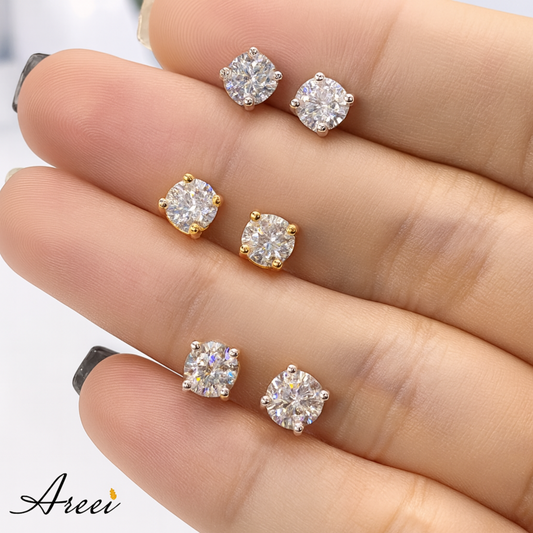
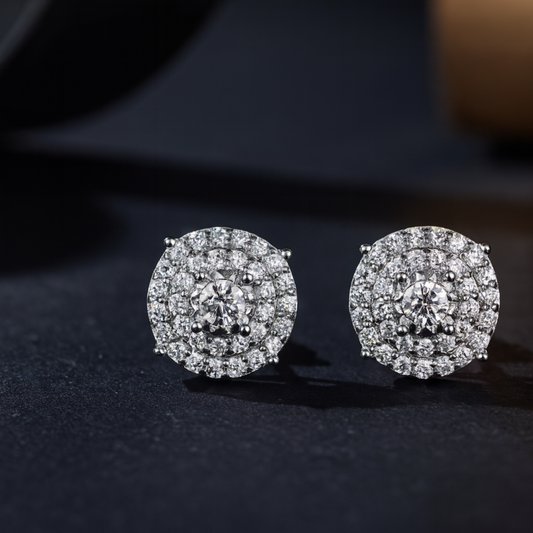
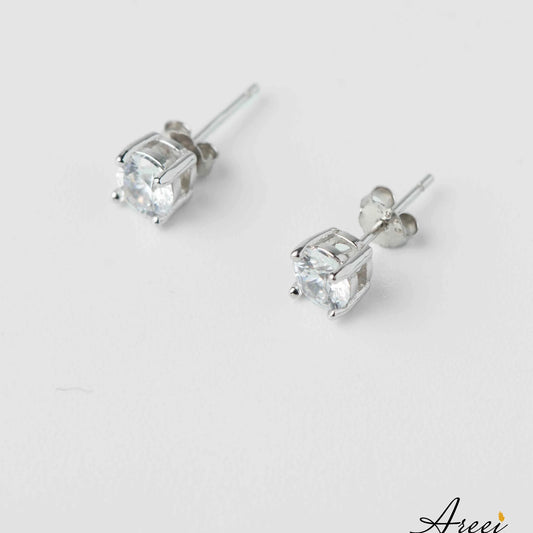
Cluster Moissanite Stud Earrings from Areei
Why Does Moissanite Sparkle So Much?
Sparkle comes from two properties: refractive index and dispersion.
- Refractive index measures how much a stone bends light. Moissanite has a higher refractive index than diamond, which gives it intense brilliance.
- Dispersion measures how strongly a stone splits white light into spectral colours. Moissanite has more than twice the dispersion of diamond, which creates its signature rainbow flashes.
The result is a stone with a lively, almost disco ball glow. Some people love this extra fire. Others prefer the more subtle, icy sparkle of a diamond. Seeing both in person is the best way to decide which you prefer.
This brilliance is especially striking in stud earrings, where the stone sits close to the face and catches light from every angle. A design such as the Cluster Moissanite Stud Earrings 0.48ct shows how several small stones working together can create a shimmering effect that feels bright but refined.
Moissanite Colour and Clarity Explained
Early moissanite stones sometimes showed a faint yellow or green tint in certain light. Modern production has improved dramatically, and today you can find stones graded in the colourless range, comparable to D, E and F on the diamond colour scale.
Colour: Look for colourless or near colourless grades if you want a bright white appearance. Warmer toned stones can be a lovely choice for vintage styles and yellow gold settings.
Clarity: Lab grown moissanite is typically very clean. Many stones are sold as eye clean, and premium stones can reach clarity levels such as VVS, meaning very, very slightly included. At that level any inclusions are tiny and invisible without magnification.
Cut: The cut has the biggest influence on how a moissanite performs. A well proportioned cut maximises brilliance, while a poor cut can leave a stone looking flat. Always buy from a seller who is transparent about cut quality and stone specifications.

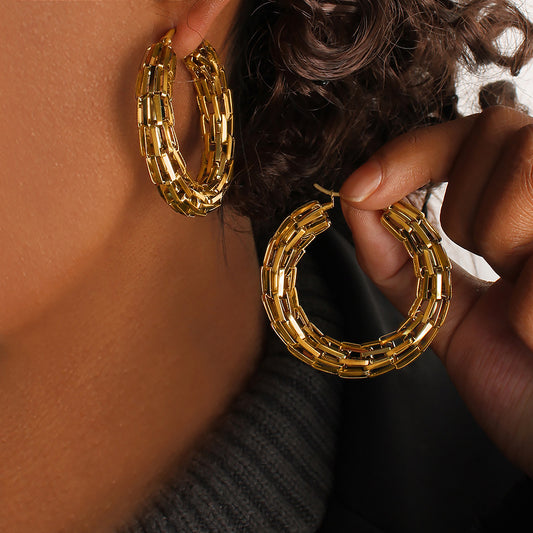
Louie Moissanite Earrings from Areei
How Much Does Moissanite Cost?
One of the biggest reasons people choose moissanite is value. A moissanite stone usually costs a small fraction of a diamond of the same visible size. Prices vary with size, colour, clarity and cut, but the savings are substantial.
That value lets you:
- Choose a larger stone than a diamond budget would allow.
- Spend more on a thoughtful setting or precious metal.
- Build a wider jewellery collection rather than one single piece.
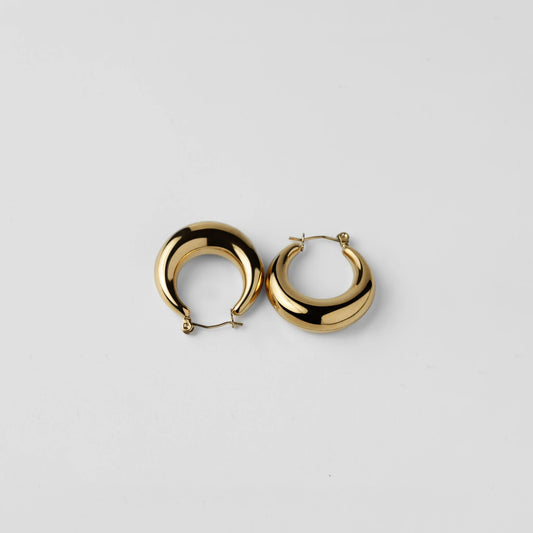
If you want a pair of earrings with real presence, the Louie Moissanite Earrings in 1ct and 2ct pairs show how much size and sparkle you can enjoy without the price tag of an equivalent diamond pair.
Is Moissanite Ethical and Sustainable?
Because moissanite is grown in a laboratory, it does not require mining. That means:
- No land disturbance or large scale excavation.
- No concerns about conflict or exploitation within the supply chain.
- A traceable origin, as the stone is created in a controlled environment.
Many buyers choose moissanite specifically because it allows them to enjoy a brilliant gemstone with a clear conscience. As with any product, the exact environmental footprint depends on the manufacturer, so it is sensible to ask a jeweller about how their stones are produced.

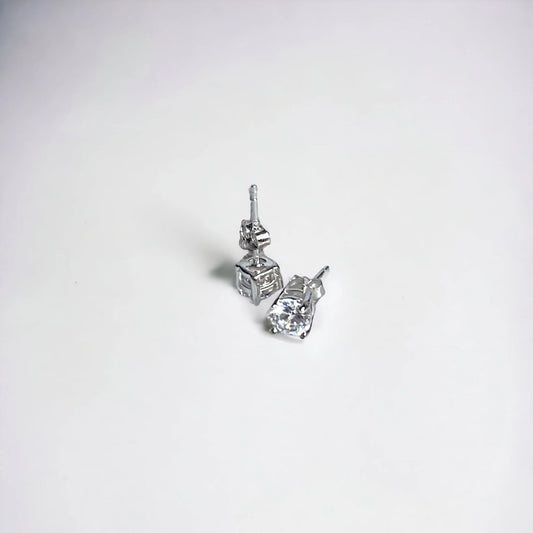
Crown Stud Earrings from Areei
Moissanite for Everyday Wear
Thanks to its hardness and resilience, moissanite suits daily life. Rings, earrings, pendants and bracelets can all be worn regularly without fear of dullness or damage.
Earrings are an especially good place to start. They are not exposed to as many knocks as rings, they frame the face beautifully and they let the stone's brilliance take centre stage. If you prefer a clean, polished look, the Crown Stud Earrings in 6.5mm, 1ct per pair, with a VVS2 moissanite stone offer a classic crown setting that lifts the stone and lets light flow through it from every direction.
How to Choose and Care for Moissanite Jewellery
Choosing well
- Check the specification. Look for stated size in millimetres, colour grade and clarity.
- Consider the setting. Prong, bezel and crown settings each change how the stone looks and how securely it sits.
- Match the metal to the mood. White metals emphasise icy brilliance, while yellow and rose gold add warmth.
- Decide on size for your lifestyle. Larger stones make a statement, while smaller stones suit quiet, everyday elegance.
Caring for your piece
- Clean regularly with warm water, a few drops of mild washing up liquid and a soft brush.
- Rinse well and dry with a lint free cloth.
- Store pieces separately to prevent metal scratches.
- Have settings checked occasionally to make sure the stones remain secure.
Moissanite attracts oils and lotions like any gemstone, so a quick clean every so often keeps it sparkling.
When You Need Something Truly One of a Kind
Not every design idea fits neatly into a catalogue. Perhaps you want an unusual stone shape, a particular band width, a setting that matches a family heirloom or a ring sized for hands that need something specific. Perhaps you simply have a design in your head that you cannot find anywhere.
In cases like these, a bespoke approach is often the best route. Areei offers a custom diamond and moissanite jewellery service for exactly this kind of request, where you can describe what you have in mind and have it crafted around your preferences, whether that is a one of a kind engagement ring, a matching set or a design with unusual requirements.
Frequently Asked Questions
What is moissanite in simple terms?
Moissanite is a colourless, lab grown gemstone made of silicon carbide. It is known for its exceptional sparkle, high durability and affordable price compared with diamond.
Is moissanite a real diamond?
No. Moissanite is a separate gemstone with a different chemical composition. It is a real gemstone, but it is not a diamond.
Does moissanite pass a diamond tester?
Many standard thermal diamond testers can read moissanite as a diamond because the two conduct heat in a similar way. Testers that measure electrical conductivity can tell them apart. A professional jeweller can identify moissanite quickly.
Does moissanite scratch or go cloudy?
Moissanite is very scratch resistant at about 9.25 on the Mohs scale. With normal care it does not cloud or fade, though it can look dull if it is covered in oils or dirt, so regular cleaning helps.
Is moissanite worth buying?
For many people, yes. It offers high brilliance, strong durability and a much lower price than diamond, along with a lab grown origin that avoids mining.
How long does moissanite last?
With sensible care, moissanite can last a lifetime and beyond. Its hardness and stability make it suitable for heirloom quality jewellery.
Is moissanite bigger than a diamond of the same carat weight?
Yes, in visible size. Moissanite is less dense than diamond, so a stone of the same carat weight looks slightly larger. This is why moissanite is often sized by millimetre diameter.
Can I wear moissanite every day?
Yes. Its hardness and toughness make it ideal for daily wear, whether in rings, earrings or pendants.
What is the best moissanite jewellery for beginners?
Stud earrings are an excellent starting point. They are simple, versatile and show off the stone's sparkle without much fuss.
Final Thoughts
Moissanite is a genuine gemstone with a fascinating origin, outstanding durability and a level of sparkle that rivals, and in some ways exceeds, a diamond. It offers beautiful value, a lab grown origin and a huge range of styles, from understated studs to bold statement pieces.
Whether you are drawn to a refined cluster design, a generous pair of studs or a crown setting with a VVS2 stone, you can explore the full range of moissanite stud earrings at Areei. And if your ideas go beyond what is on the shelf, the bespoke jewellery service is there to bring them to life.