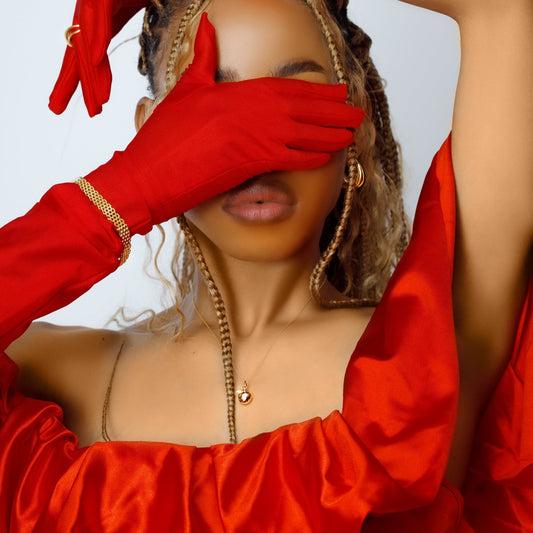
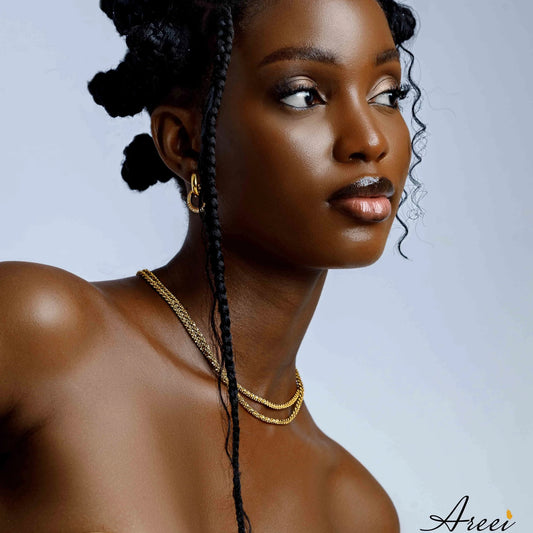
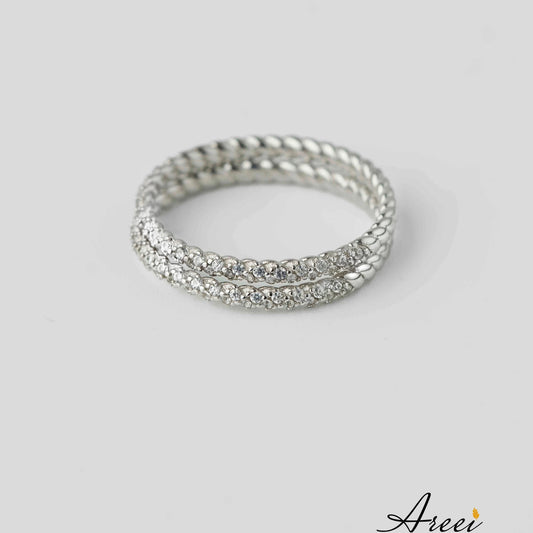
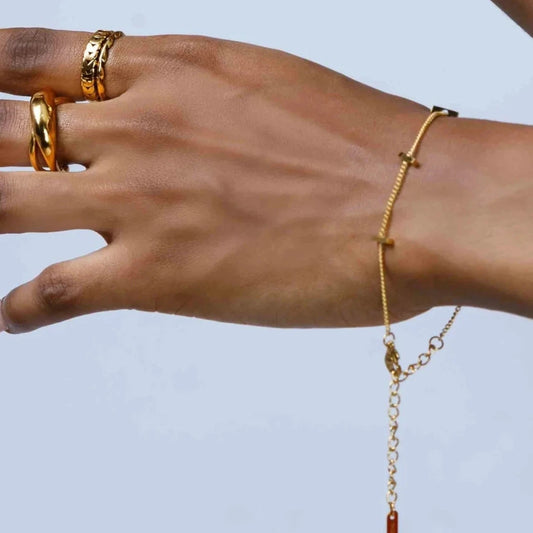
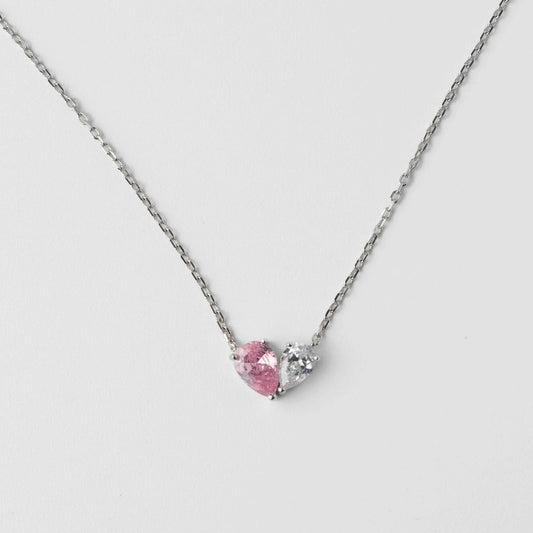
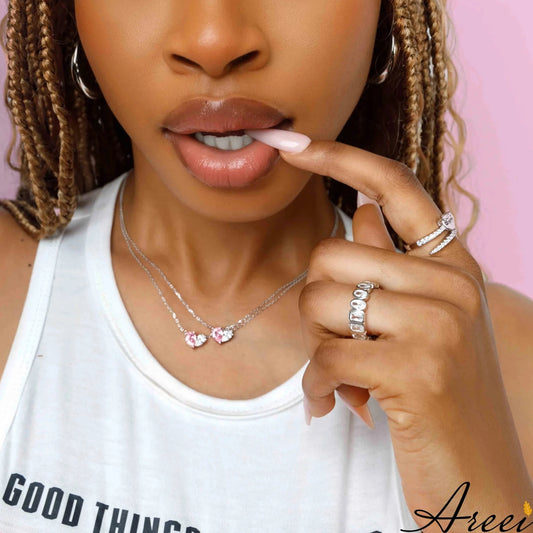
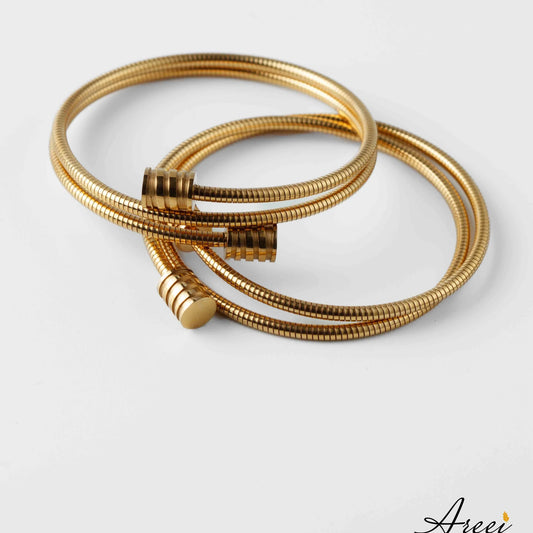
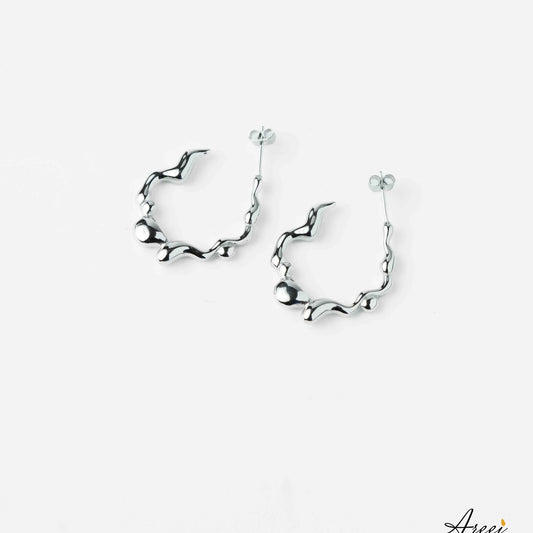
Nour Tennis Necklace & Tennis Bracelet from Areei
What Is a Tennis Bracelet?

A tennis bracelet is a slim, flexible bracelet featuring a continuous, symmetrical line of individually set gemstones, most commonly diamonds. Each stone is held in its own setting and linked together to form a delicate chain that sits flat and elegantly against the wrist. The overall effect is one of quiet luxury, where the stones catch the light with every movement of the wrist.
The name comes from a memorable moment in 1987 when professional tennis player Chris Evert lost her diamond bracelet during a match at the US Open and asked officials to pause play while she searched for it. Before that moment, the style was simply referred to as an inline diamond bracelet. From that point on, the world began calling it a tennis bracelet, and the name has stuck ever since.
What Is a Tennis Necklace?

Nour Tennis Necklace from Areei
A tennis necklace follows the exact same concept as a bracelet but is designed to be worn around the neck. It features a continuous row of evenly matched gemstones set in a flexible chain, creating a refined and understated look that works beautifully for both everyday wear and formal occasions.
Tennis necklaces are available in a range of lengths, typically from choker length (around 14 to 16 inches) to longer statement styles (18 to 24 inches), allowing the wearer to choose a look that suits their neckline and personal style. Some styles feature a single row of stones, whilst others layer two or three rows for a bolder, more substantial look.
The History Behind the Style
Whilst the name tennis bracelet only came about in 1987, the style itself has roots going back much further. Inline diamond bracelets were popular throughout the Art Deco period of the 1920s and 1930s, favoured for their geometric precision and clean lines. They were considered a symbol of sophistication and were frequently worn by high society women of the era.
The tennis necklace followed naturally as jewellers extended the concept to suit formal necklines. By the 1990s and early 2000s, both pieces had become staples of red carpet jewellery and bridal collections worldwide, cementing their place as true classics of fine jewellery design.
If you love the elegance of the Tennis Bracelet & Tennis Necklace, you will find plenty more to discover in our Bracelet Collection and Necklace Collection. From stacking styles to timeless classics, we have something for every wrist and neckline. Shop the full collection now!!!
What Gemstones Are Used?
Whilst diamonds are the most popular and traditional choice, tennis bracelets and necklaces are also made with a wide variety of gemstones:
- Sapphires for a deep blue, classic look that has royal associations
- Emeralds for a rich, jewel-toned style with timeless appeal
- Rubies for bold colour and vibrant warmth
- Moissanite as a brilliant, affordable diamond alternative with exceptional fire and sparkle
- Lab-grown diamonds for a sustainable, cost-effective option that is chemically identical to mined diamonds
- Cubic zirconia for budget-friendly everyday wear
- Aquamarine and blue topaz for softer, pastel-toned alternatives
When choosing coloured stones, it is worth paying attention to consistency across the piece. The stones should be well matched in colour, size, and clarity to maintain the clean, uniform look that defines the tennis bracelet and necklace style.

How to Choose the Right One
Metal Type
The most popular metal choices are white gold, yellow gold, rose gold, and platinum. White gold and platinum are particularly popular as they complement the brilliance of diamonds without competing with the stones. Yellow gold offers a warmer, more classic aesthetic that suits vintage-inspired styles, whilst rose gold brings a modern, romantic feel to the piece.
Carat Weight
For bracelets, total carat weights typically range from 1ct to 10ct or more. For necklaces, the total carat weight is naturally higher due to the additional length. Higher carat weight increases brilliance and presence but also increases cost. A total carat weight of 3ct to 5ct is a popular middle ground that offers excellent sparkle without an excessive price.
Stone Quality
When buying diamonds, it is worth considering the four Cs: cut, colour, clarity, and carat. For a tennis bracelet or necklace, cut and colour tend to have the greatest visible impact. Stones graded G to H in colour appear bright white to the eye, and a VS2 to SI1 clarity grade offers a clean appearance without the premium cost of flawless stones.
Setting Style
The four-prong setting is the most traditional and allows the most light into the stone, maximising brilliance. Bezel settings encircle each stone in a rim of metal for a more modern look and offer greater protection for the gemstones. Channel settings sit the stones flush within the metal for a sleek, contemporary finish that is also more snag-resistant for everyday wear.
Clasp and Security
A reliable clasp is absolutely essential, particularly for bracelets. Look for box clasps with safety catches or lobster clasps with a double lock for added security. Some higher-end pieces feature a figure-eight safety clasp as an additional safeguard. Do not underestimate this detail, as a poor quality clasp is the most common reason a tennis bracelet is lost.
How to Style a Tennis Bracelet and Necklace
- Together as a set: Wearing both pieces in matching metal and stone creates a polished, coordinated look that is ideal for weddings, black-tie events, or any special occasion.
- Stacked: Layer a tennis bracelet with other fine jewellery pieces such as bangles, cuffs, or a simple chain bracelet for a modern, curated wrist stack.
- Everyday wear: A simple tennis bracelet in white gold or rose gold with smaller stones is perfectly suited to everyday wear and pairs effortlessly with both casual and professional outfits.
- Neckline pairings: A tennis necklace looks stunning with V-necks, off-the-shoulder styles, and strapless necklines where the stones can be fully appreciated. A longer tennis necklace also works beautifully over a high neckline for a layered effect.
- Bridal jewellery: Both pieces are enormously popular choices for brides. The clean, timeless design complements almost any wedding dress style and photographs exceptionally well.

Nour Tennis Necklace from Areei
Tennis Bracelet vs Tennis Necklace: Which Should You Buy?
If you are buying your first piece, a tennis bracelet is generally the more versatile starting point. It is easier to wear daily, works across a wider range of outfits and occasions, and tends to be more affordable than a necklace of comparable stone quality due to its shorter length.
A tennis necklace, however, makes a stronger visual statement and is particularly well suited to formal occasions, evening wear, and bridal styling. If you already own a tennis bracelet and are looking to build on your collection, adding a matching necklace is a natural and elegant next step.
Both pieces can also be worn independently without looking incomplete, which makes them highly practical investments within a jewellery wardrobe.
How to Care for Your Tennis Bracelet or Necklace
- Store separately in a soft pouch or individual jewellery box compartment to avoid scratching other pieces.
- Clean regularly using warm water, a small amount of mild dish soap, and a soft toothbrush. Gently scrub around each setting and rinse thoroughly.
- Remove before swimming as chlorine can damage metal settings and dull the appearance of stones over time.
- Take off before exercising to avoid snagging or putting unnecessary strain on the settings.
- Have the clasp and settings checked by a jeweller once a year to ensure all stones are secure and no prongs are bent or worn.
- Avoid harsh chemicals such as cleaning products and perfumes directly on the piece, as these can affect the metal finish.
Explore more stunning necklaces and bracelets to add to your collection, from delicate chains to bold statement pieces, our Necklace Collection and Bracelet Collection has something for every style and occasion. Check it out now!!!
How Much Should You Expect to Pay?
Price varies enormously depending on the metal, gemstone type, total carat weight, and the quality of the stones. As a rough guide:
- Cubic zirconia in silver or gold vermeil: from around £50 to £200
- Lab-grown diamond in gold: from around £300 to £1,500 depending on carat weight
- Natural diamond in white gold or yellow gold: from around £800 to £5,000 for a bracelet; higher for a necklace
- Natural diamond in platinum: from around £2,000 upwards
Lab-grown diamonds represent outstanding value and are growing rapidly in popularity. They are optically, chemically, and physically identical to mined diamonds, and for most buyers the difference in cost is compelling enough to make them the preferred choice.
Are Tennis Bracelets and Necklaces Worth the Investment?
Yes, particularly when buying natural diamonds or high-quality gemstones set in gold or platinum. These pieces hold their value well over time, are entirely timeless in style, and rarely fall out of fashion. Unlike trend-driven jewellery, a classic diamond tennis bracelet or necklace will look just as relevant in twenty years as it does today.
Lab-grown diamond versions offer outstanding visual quality at a significantly lower price point, making them an excellent choice for those who want the look and feel of fine diamond jewellery without the premium cost of mined stones.
Final Thoughts
The tennis bracelet and tennis necklace are two of the most enduring and elegant pieces in fine jewellery. Whether you are buying for yourself, as a gift, or as part of a bridal set, they are versatile, sophisticated, and suited to almost every occasion. Focus on stone quality, metal choice, and setting security, and you will have a piece that lasts a lifetime and never goes out of style.