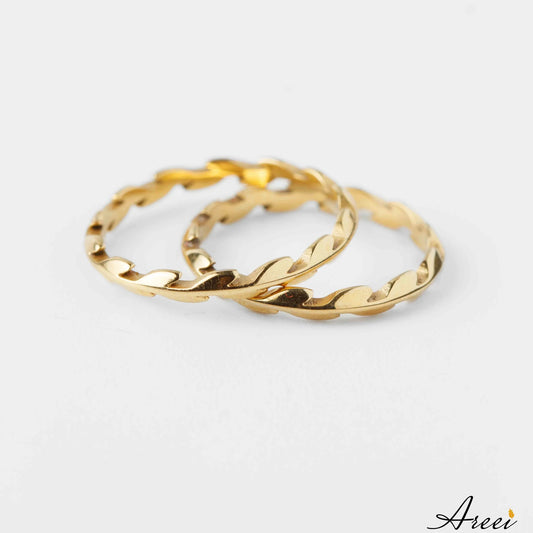
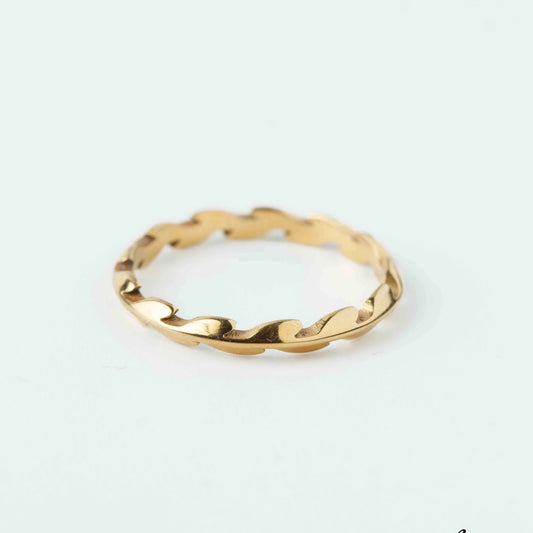
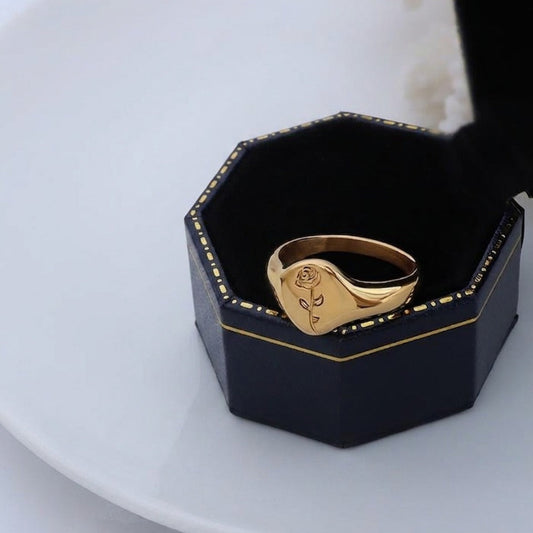
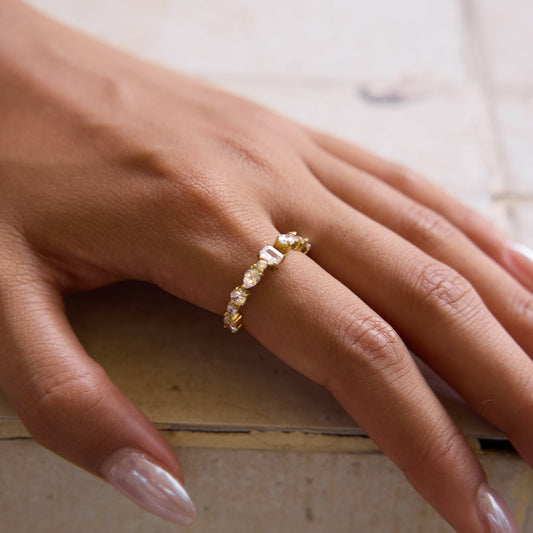
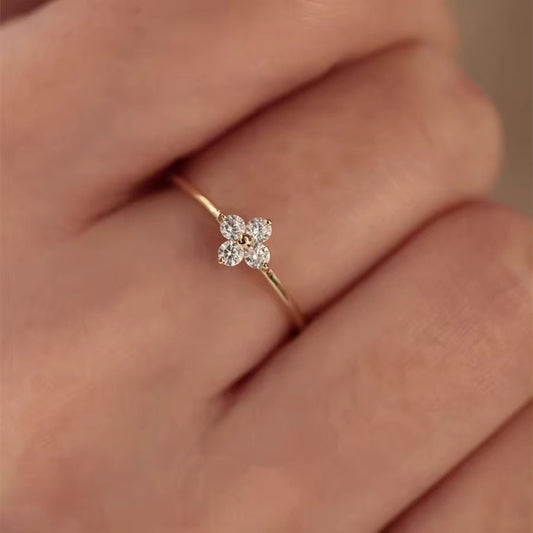
When it comes to casual rings, there is good news: there are no strict rules. Unlike engagement rings or wedding bands, a casual ring can sit wherever it feels right. That said, each finger does carry its own subtle associations, practical considerations, and style logic. Understanding these helps you make deliberate, confident choices rather than simply guessing.
Does It Actually Matter Which Finger You Choose?
Not strictly, no. However, the finger you choose does send quiet signals about personality and intention. Different fingers also have very real practical differences. Width, knuckle prominence, and how much a finger moves during daily tasks all affect how a ring sits, feels, and looks over time. The guide below covers both the cultural symbolism and the practical styling logic for every finger.
The Index Finger: Confidence and Authority
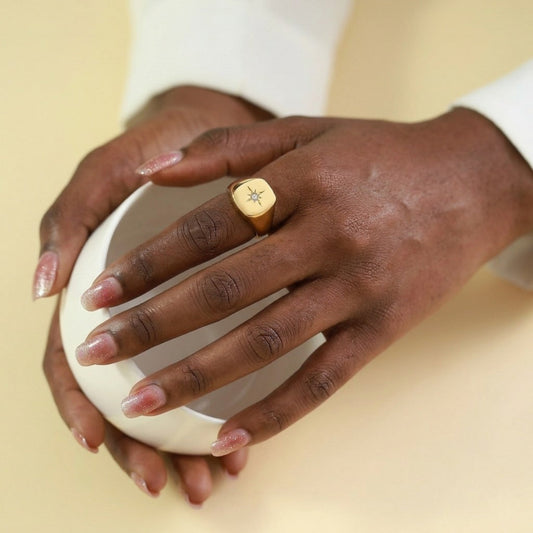
The index finger has historically been associated with leadership, ambition, and self-assertion. Signet rings and class rings have traditionally been worn here for precisely that reason. For casual wear, it is an excellent choice for a statement ring. It is highly visible, easy to gesture with, and suits bold, chunky, or sculptural pieces that deserve attention.
One practical note: because the index finger is used constantly in everyday gestures and pointing, make sure any ring worn here has a smooth profile. Protruding settings or sharp edges will quickly become irritating.
Best for: statement rings, signet rings, chunky bands, large gemstone pieces.
The Middle Finger: Balanced and Expressive

The middle finger carries no strong cultural associations in most Western traditions, making it a genuinely neutral choice. It is the perfect canvas for experimenting with bolder or more unusual pieces without any symbolic implication attached.
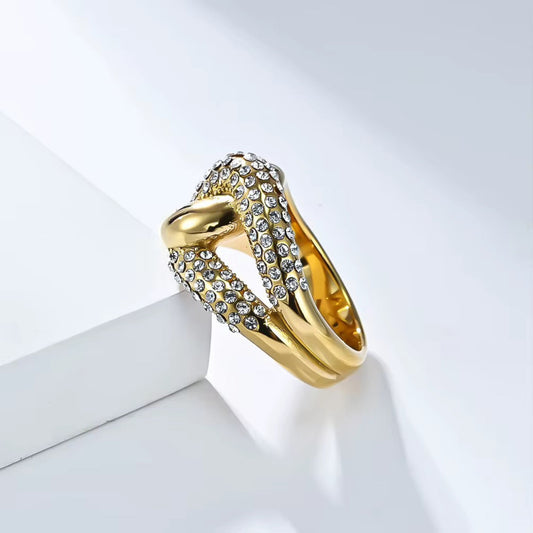
Its central position on the hand gives it a naturally balanced look, and larger rings or wide bands tend to sit well here because it is the most structurally prominent finger. If you already wear a ring on the index or ring finger of the same hand, placing one on the middle finger creates natural, even spacing that looks intentional rather than crowded.
Best for: wide bands, geometric rings, bold statement pieces.
Check out our ring collection and find the perfect piece for every finger. From slim stacking bands to bold statement rings, we have something for every style and occasion. Shop now and start wearing rings with intention.
The Ring Finger: Not Just for Commitment

Most people associate the left ring finger exclusively with engagement rings and wedding bands, but this is a cultural convention rather than a universal rule. In many European countries, the wedding ring is worn on the right hand, leaving the left ring finger entirely free for casual wear.
If you are not engaged or married, wearing a casual ring on the ring finger of either hand is perfectly reasonable. On the right hand in particular, it reads simply as personal adornment with no romantic connotation whatsoever.
If you do want to wear something on your left ring finger but are concerned about assumptions, choose a distinctly non-traditional design. A twisted metal band, a bold coloured stone, or a hammered finish will signal clearly that it is a style choice rather than a romantic symbol.
Best for: stackable bands, delicate rings, right-hand statement rings, midi rings.
The Pinky Finger: Personality and Flair

The pinky has long carried associations with charm and a certain quiet confidence. In English heritage tradition, signet rings were worn on the left pinky by the nobility. Today, pinky rings remain popular for both men and women precisely because they feel playful and distinctive without being overpowering.
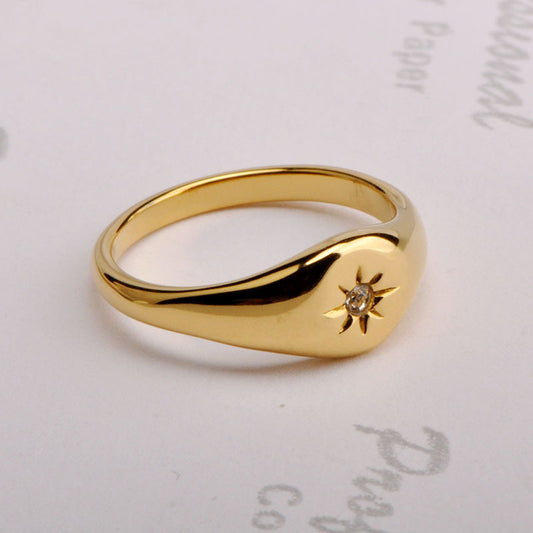
Because the finger is small, rings worn here tend to work best when they are slim, minimal, or delicate. Overly heavy or wide pieces can look unbalanced on a pinky. A thin gold band, a small signet, or a delicate stone ring all work beautifully here.
A popular current styling approach is to wear a pinky ring on one hand and a single ring on a different finger of the other hand. This creates a balanced look across both hands without clustering everything together.
Best for: signet rings, slim bands, midi rings, stacking sets.
The Thumb: Bold and Unconventional

Thumb rings have enjoyed periodic revivals throughout fashion history and are currently very popular in contemporary jewellery. They make a confident, fashion-forward statement because they sit apart from the conventional ring-wearing fingers and are immediately eye-catching.
The thumb is wider than the other fingers and sees a great deal of movement, so rings worn here should be sturdy and comfortable. Wide, flat bands in silver, gold, or textured metal are particularly well suited. Because a thumb ring is so immediately noticeable, it works best as the anchor piece on the hand. Keep the rest relatively understated, perhaps just one slim band elsewhere, rather than competing with multiple other pieces.
Best for: wide bands, chunky rings, textured metal, artisan pieces.
Stacking Multiple Casual Rings
Wearing more than one casual ring at once is one of the most enduring jewellery trends of recent years. Done thoughtfully, it looks personal and intentional. A few principles make all the difference.
Odd numbers tend to look more natural than even numbers. Three rings or five rings on one hand has a more artful quality than two or four, which can feel overly symmetrical. Mix at least one slim ring with one wider ring to create visual rhythm rather than repeating the same profile across every finger. Keep metal tones consistent wherever possible. Sticking to one tone, whether gold, silver, or rose gold, creates cohesion. Mixing tones can work but requires more confidence and a deliberate eye.
Space rings out across the hand with bare fingers between them rather than covering every finger. This makes each ring more visible and prevents the overall look from becoming busy. Finally, if you wear several rings on one hand, keep the other hand minimal. One ring on the opposite hand is usually enough to create balance without competition.
Tips for Men
Men wearing casual rings is widely accepted across social and professional contexts, and the market for men's jewellery has grown substantially. The most popular placements for men remain the index finger, the right ring finger, and the pinky. Signet rings on the pinky are a particularly timeless option with strong heritage appeal. Wide, brushed-metal bands on the middle finger offer a more contemporary look.
For anyone new to wearing rings, starting with a single piece on the non-dominant hand is a comfortable entry point. A slim silver band on the right ring finger or a classic signet on the left pinky are both versatile starting points that pair easily with most wardrobes. Consider the proportions of your hand too. Larger hands carry wider, chunkier bands with ease, while slimmer hands often look better with narrower, more refined pieces.
Tips for Women
Contemporary styling for women leans into the freedom of ring placement enthusiastically. The right ring finger, the index finger, and the middle finger are all popular locations for statement or everyday rings outside of any romantic symbolism.
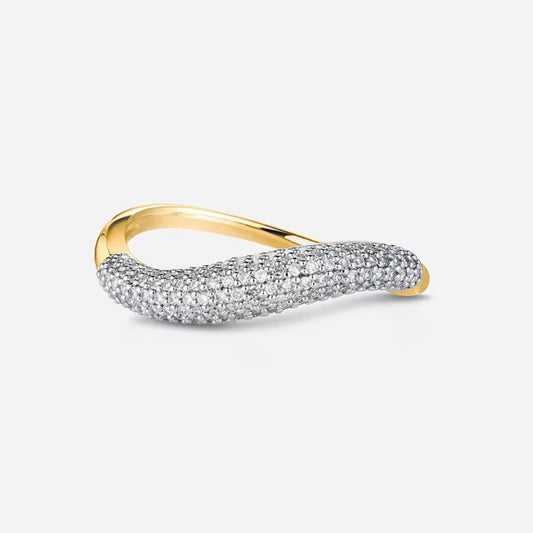
Midi rings, worn above the knuckle rather than at the base of the finger, are an excellent way to create a layered look without adding more rings to an already-adorned base. They work particularly well on the index, middle, and ring fingers. Stacking thin bands on a single finger also remains popular, particularly on the ring and middle fingers. Two or three delicate bands in the same metal tone look elegant and curated without feeling overdone.
Browse our beautiful ring collection and discover pieces crafted to be worn and loved every day. Whether you are just starting out or adding to an existing collection, find your next favourite ring and make it your own.
Frequently Asked Questions
Is there a rule about which hand to wear a casual ring on? There is no universal rule. Either hand is appropriate. Some people prefer to keep their dominant hand free of rings for practical comfort, but personal preference should guide the decision entirely.
Can I wear a casual ring on my left ring finger without people assuming I am engaged? Yes. Wearing a ring on the left ring finger no longer automatically signals engagement or marriage, particularly among younger generations. A distinctly non-traditional design makes it clear the ring is a personal style choice.
What is the most popular finger for casual rings right now? The index finger and pinky finger are both very popular in current casual ring trends for men and women alike. Thumb rings have also seen a significant revival in contemporary jewellery.
What finger is best for a signet ring? Traditionally, signet rings are worn on the left pinky in British heritage styling. Today they are equally popular on the right pinky or the index finger. All three placements have strong precedent and look excellent in casual wear.
Are there cultural differences in ring finger conventions? Yes. In several European countries, the wedding ring is worn on the right ring finger, so the left is more freely used for casual jewellery. If you travel internationally, it is worth being aware of local conventions, though casual rings are generally understood as personal style across most cultures.
The Bottom Line
The best finger for a casual ring is whichever one feels right for you. Use the symbolism and styling guidance above as a framework, not a rulebook. Start with one ring, get comfortable with how it sits and feels, then build from there. The most important thing is that you wear it with confidence.