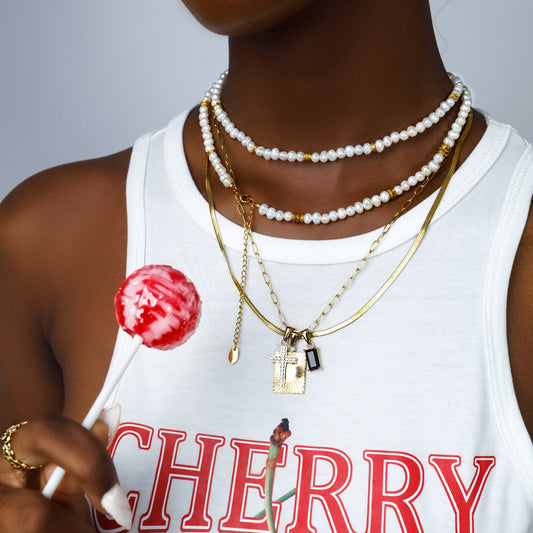
Necklace stacking has become one of the most enduring jewellery trends of the decade, and in 2026 it is more refined than ever. The days of throwing on a handful of chains and hoping for the best are behind us. Today, the best dressed stacks are intentional, balanced, and personal. This guide walks you through exactly how to build one.
Why Necklace Stacking Works
The appeal of layered necklaces lies in their versatility. A well constructed stack can be dressed up for an evening out or worn casually day to day, simply by swapping one piece. Unlike most jewellery trends, stacking is also deeply personal the combination of lengths, symbols, and textures you choose tells a story that is uniquely yours.
The key reason so many stacks fall flat is a lack of contrast. When every necklace is the same length, the same chain style, or the same visual weight, the layers merge into one indistinct mass. The golden principle is variety: vary your lengths, vary your textures, and vary the visual weight of each piece.
Getting Your Lengths Right

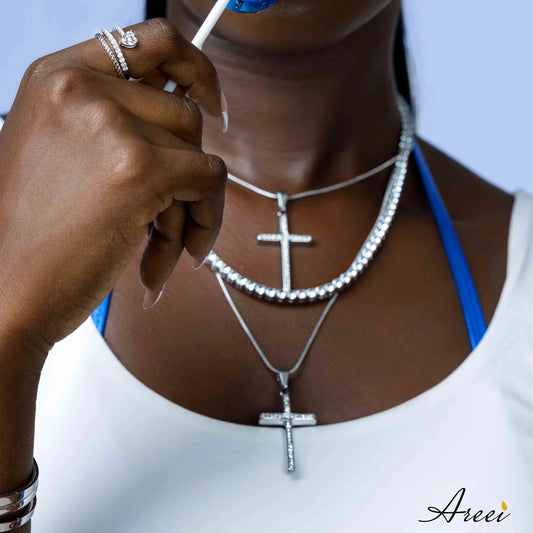
Length is the single most important factor in a successful stack. Each necklace should sit at a visibly distinct level on the chest, with roughly 2 to 3 inches of separation between each layer. A classic three-layer stack follows this structure:
- Short (30 to 38cm): Sits just below the collarbone. This is your foundation typically a choker, a coin pendant, or a simple fine chain.
- Mid (42 to 48cm): This is your statement layer, where a pendant or more distinctive chain draws the eye. It should sit at the centre of the chest.
- Long (52cm and above): The anchor layer grounds the stack. This piece is usually simpler in design a plain chain, a rope chain, or a flat link that lets the layers above it shine.
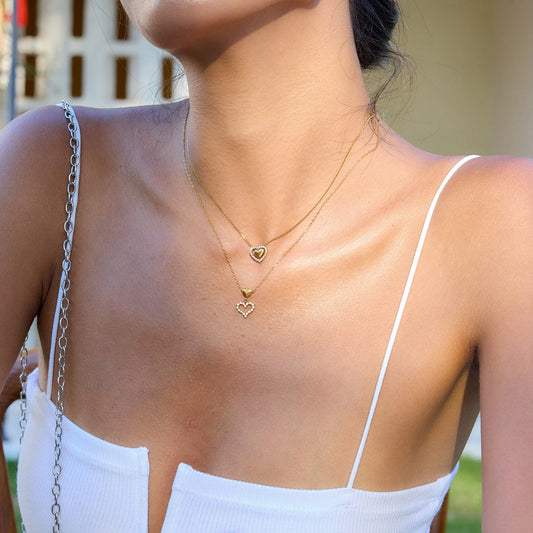
If you are wearing only two necklaces, apply the same logic: one shorter, one longer, with enough separation that both are clearly visible.
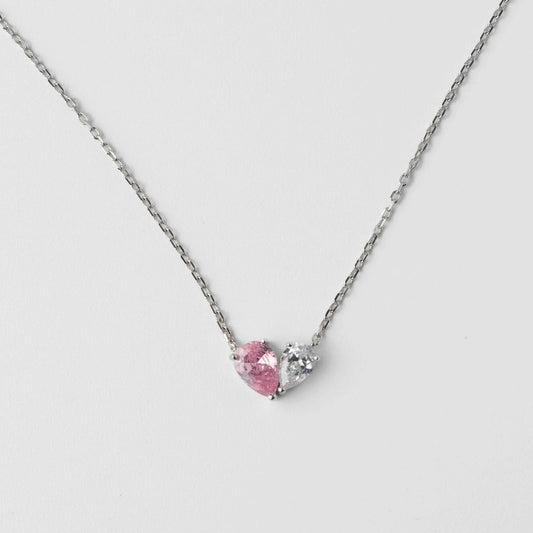
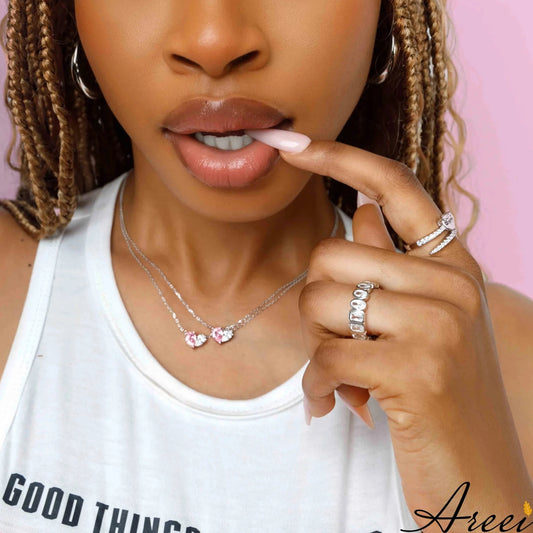
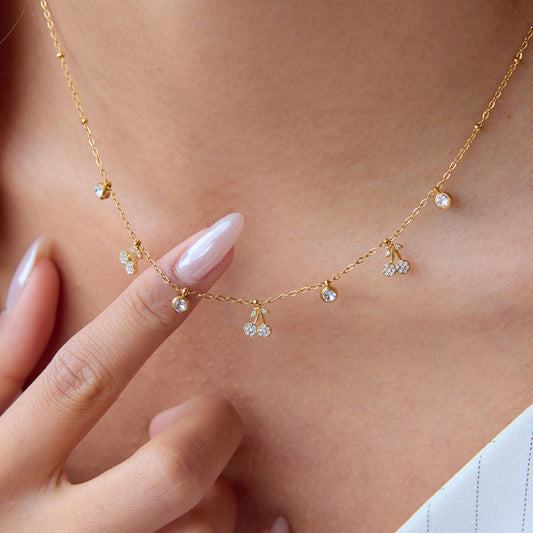
Good pick: Halo Necklace (£20) A heart pendant on a fine chain that works beautifully as a short base layer without overpowering pieces above it.
Mixing Chain Styles and Textures

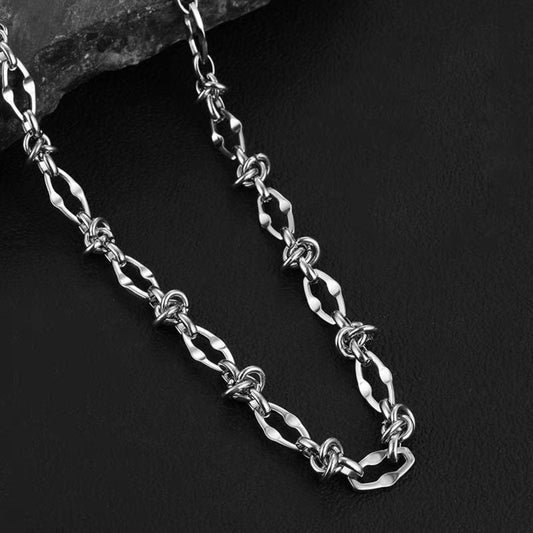
Figaro Rope Cuban Chain Necklace from Areei
Once you have your lengths sorted, the next step is texture. Wearing three chains of identical style say, three plain cable chains will always look flat, no matter how well spaced they are. The stack needs contrast to have depth.
Some of the most effective combinations in 2026 include:
- A fine, smooth chain paired with a chunkier flat link or Cuban chain.
- A delicate pendant alongside a textured rope or herringbone-style chain.
- A plain gold chain as an anchor with a more detailed or jewelled piece in the mid-layer.
The rule of thumb is that no two adjacent necklaces should share the same chain style. If your short layer is a fine trace chain, your mid layer should have some form of visual difference whether through weight, pattern, or pendant detail.
Good pick: Figaro Rope Cuban Chain Necklace (from £15): A bold Figaro link chain that provides excellent textural contrast when worn as a long anchor layer beneath finer, more delicate pieces.
Choosing Your Statement Pendant

Apple of My Eye Necklace from Areei
Every great stack has one piece that carries the most visual weight. This is your statement pendant, and it almost always sits in the mid layer. It might be a heart, a cross, a coin, a star, or any pendant with personal meaning to you.
The most common mistake people make here is choosing two statement pendants and placing them at similar lengths. They compete for attention and the stack loses its hierarchy. Choose one centrepiece and let the other necklaces support it.
When choosing a statement pendant, consider the occasion. A sparkle-set pendant with cubic zirconia or moissanite reads as dressed up; an engraved coin or symbolic charm is more versatile for everyday wear.
Good pick: Apple of My Eye Necklace (£50): A gold apple pendant set with moissanite diamonds a striking mid-layer piece that holds its own as the centrepiece of any stack.
Metal Tones: Matching vs Mixing
The traditional advice is to stick to one metal tone throughout your stack. A full gold stack or a full silver stack is always cohesive and requires very little thought to pull together. For 2026, this remains the safest and most polished approach.
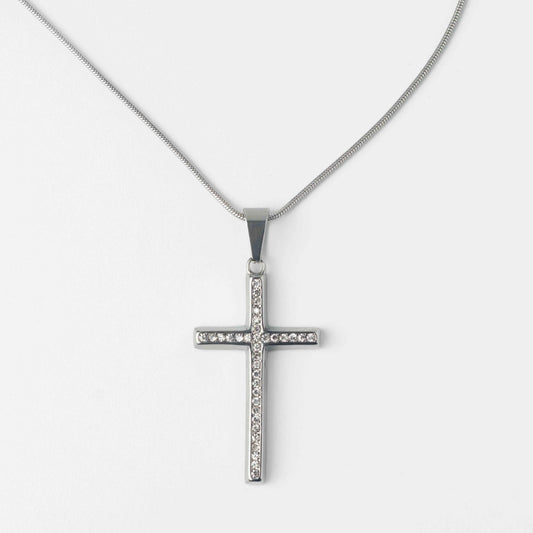
That said, intentional metal mixing has become increasingly mainstream. The key word is intentional. A silver cross necklace layered within a predominantly gold stack, for example, creates a deliberate contrast that feels curated rather than accidental. The mistake to avoid is mixing metals haphazardly if you are going to mix, commit to it and let the contrast be visible.
Neckline and Outfit Considerations
The neckline of your outfit determines how much of your stack will be on display. Deep V-necks, scoop necks, and off-the-shoulder styles are the most forgiving they provide a clear canvas for multiple layers. High necklines and crew necks work best with just one or two necklaces that sit above the collar rather than beneath it.
For casual wear, a two-necklace stack is often all you need. For evenings or occasions where you want more impact, a three-layer combination creates a fuller, more deliberate look. Resist the urge to stack more than four necklaces at once beyond that, the look tends to lose the refinement that makes a good stack so appealing.
Building Your Stack: A Practical Starting Point

Flow Chain Necklace from Areei
If you are starting from scratch, the simplest approach is to begin with one plain chain at a length you wear regularly, then add a pendant necklace 2 to 3 inches shorter. Wear that combination for a few days and notice where the gap feels. The third piece your long anchor layer drops below both and ties the stack together.
Do not feel pressure to complete your stack all at once. The best-looking stacks are usually assembled gradually, each piece chosen because it adds something the existing combination was missing.
Good starting point: Flow Chain Necklace (£35): A fluid, draping long chain that works as an elegant anchor layer for almost any combination of pieces above it. Browse the full Areei necklace collection here.
Final Thought
The best necklace stack is the one that feels like you. Use length, texture, and contrast as your framework but within that framework, let your instincts guide you. Whether that means a delicate two-piece combination or a bold layered statement, the principles remain the same. Start simple, build gradually, and wear what you love.