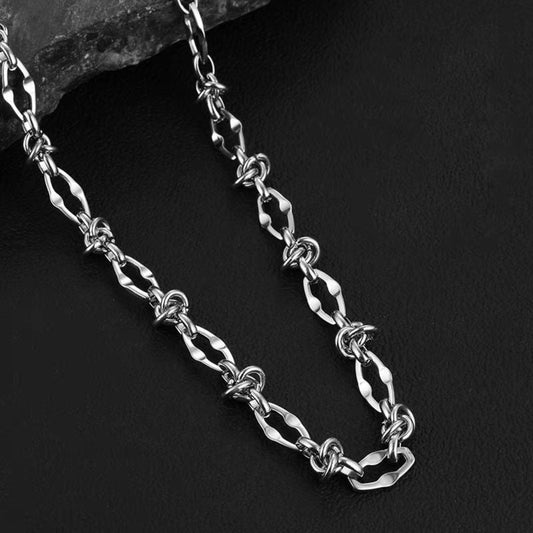
A chain that is too long can sit awkwardly, tangle easily or hide a pendant you want to show off. The good news is that learning how to cut a jewellery chain is easier than most people expect. With the right tools and a little patience, you can shorten a necklace, bracelet or anklet at home in under twenty minutes.
This guide explains which tools you need, how to cut different types of chain, and how to avoid the mistakes that damage jewellery.
Before You Start: Should You Cut the Chain Yourself?
Cutting a chain is a permanent change, so it is worth pausing first. Consider taking the piece to a jeweller if:
- The chain is solid gold, platinum or an expensive heirloom piece.
- The chain is very fine, such as a delicate snake or rope chain.
- You are not confident using small pliers.
For fashion jewellery, sterling silver and most everyday gold-plated or gold-filled chains, home cutting is perfectly manageable.
Tools You Will Need

You do not need a full workshop. Most chains can be shortened with a few inexpensive tools:
- Two pairs of jewellery pliers (flat-nose or chain-nose) for opening and closing links
- Flush wire cutters (also called side cutters) for clean cuts through thin chain
- A new jump ring or lobster clasp if you need to reattach a fastening
- A soft cloth or tray to protect the jewellery and catch small parts
- A ruler or tape measure for accurate sizing
Step 1: Decide on the Right Length
Measure before you cut. Put the chain on and use a mirror, or lay it flat against a tape measure. Common necklace lengths are:
- 14 to 16 inches (35 to 40 cm): choker style, sits at the base of the neck
- 18 inches (45 cm): the most popular length, sits on the collarbone
- 20 to 24 inches (50 to 60 cm): sits on the chest
- 28 inches (70 cm) and over: long, layered styles
Remember that it is much easier to remove another link later than to put one back. Aim to take away less than you think you need, then adjust.
Step 2: Lay the Chain Flat and Mark Your Point
Place the chain on a soft cloth and straighten it out. Decide which links you will remove, and keep the clasp and any end rings within easy reach. If the chain has a pendant or charm, remove it first so it does not slide off and get lost.
Step 3: Open a Link
For most chains with individual links, the safest method is to open a link rather than slice through it:
- Hold the chain steady with one pair of pliers.
- Grip the link you want to open with the second pair.
- Twist the link sideways, moving one pair of pliers towards you and the other away. Do not pull the ends apart, as this weakens the metal.
- Slide the link free from its neighbours.
Opening links like this keeps the metal strong and makes the chain easy to close again.
Step 4: Cut the Chain if the Links Do Not Open
Some links are soldered closed and cannot be twisted open. In that case:
- Position a flush cutters on the link you wish to remove.
- Cut through one side of the link with a firm, steady squeeze.
- Remove the extra links, keeping them in case you need to resize later.
- Use the cutters or a small file to smooth any sharp edges.
For thicker or hardened chains, a jeweller's saw gives a cleaner cut than cutters.
Step 5: Reattach the Clasp
Once the extra links are removed, you need to rejoin the clasp:
- Open a jump ring by twisting it sideways with two pliers.
- Thread the jump ring through the last link of the chain and through the clasp loop.
- Twist the jump ring closed so that there is no visible gap.
- Gently tug the join to make sure it is secure.
If the original jump ring is damaged or too small, replace it. A weak join is the most common reason a shortened necklace fails later.
How to Cut Different Types of Chain
Not every chain behaves in the same way. Here is how to approach the most popular styles.
Cable and Curb Chains
These are the easiest to shorten. The links are individual and usually open with pliers, so you can remove them one at a time.
Box and Figaro Chains
These work in a similar way, but the links can be tighter. Work slowly and avoid squeezing the metal out of shape.
Snake, Rope and Mesh Chains
These cannot be shortened by removing links, because the chain is continuous. A jeweller can cut them and attach new end caps, which is the better option for these styles.
Bracelets and Anklets
The same method applies. Remember that bracelets need a little ease, so leave about half an inch (1 cm) of extra length so that the piece can move comfortably on the wrist.
Common Mistakes to Avoid
- Cutting too much at once. Remove one link at a time and test the length.
- Pulling links apart instead of twisting. This weakens the metal and leaves a visible gap.
- Using household scissors or kitchen tools. They damage both the chain and the tool.
- Skipping safety glasses. Small metal pieces can spring away unexpectedly.
- Forgetting to close the jump ring properly. A tiny gap can let the clasp slip free.

Figaro Rope Cuban Chain from Areei
How to Care for Your Chain After Cutting
Once your chain is the perfect length, wipe it with a soft, dry cloth to remove fingerprints and metal dust. Store it flat or hanging, away from other jewellery, to prevent tangling. Keep it away from perfume and water where possible, particularly if the chain is plated, as moisture and chemicals can wear down the finish over time.
Frequently Asked Questions
Can I cut a gold chain at home?
Yes, if it is a simple link chain and you have the right tools. For solid or high-value gold, a professional jeweller is the safer choice.
What is the best tool for cutting a jewellery chain?
A pair of flush cutters is ideal for thin chains, while two pairs of flat-nose pliers are best for opening links. For thick chains, use a jeweller's saw.
Can I shorten a necklace without cutting it?
Yes. You can add a chain extender in reverse, use a shorter clasp position, or wear the chain doubled. These options keep the original chain intact.
Will cutting a chain reduce its value?
For fashion jewellery, no. For fine or antique pieces, altering the chain can affect its value, so speak to a jeweller first.
How much does a jeweller charge to shorten a chain?
Prices vary by shop and metal, but a simple shortening is usually an inexpensive service.
Final Thoughts
Knowing how to cut a jewellery chain gives you the freedom to make a necklace or bracelet fit perfectly. Measure carefully, use the right tools, and remove links gradually. If you are ever unsure, a professional jeweller can finish the job in minutes.