Ear stacks have evolved from a niche styling choice into one of the most talked-about jewellery movements of recent years. Where once a simple pair of studs sufficed, the contemporary approach treats the ear as a canvas: a layered, considered composition of studs, hoops, huggies, climbers, and cuffs that tells a story unique to the wearer.
Whether you are entirely new to the concept or already own a handful of piercings and are looking to refine your curation, this guide covers everything from the anatomy of a well-built stack to the piercing placements that make it possible, the earring shapes that work best, and the trends shaping ear stacks.
What Is an Ear Stack?
An ear stack, sometimes called a "curated ear," is the practice of wearing multiple earrings across several piercings on one or both ears in a deliberate, coordinated way. Rather than simply wearing whatever earrings are to hand, the goal is intentional composition: choosing pieces that complement one another in scale, texture, metal, and style.
The Anatomy of an Ear Stack: Piercing Placements Explained

Understanding where different piercings sit on the ear is the first step to building a stack that looks cohesive rather than haphazard. Here is a breakdown of the most common placements used in ear stacking.
Lobe (1st piercing): The soft lower portion of the ear. Works well with studs, hoops, drops, and huggies. Very low pain level.
Lobe (2nd and 3rd piercings): Positioned above the first lobe piercing. Suits smaller studs, huggies, and mini hoops. Low pain level.
Helix: The upper cartilage rim. Best suited to flat-back studs, small hoops, and rings. Moderate pain level.
Forward helix: The inner upper cartilage, near the head. Tiny flat-back studs work best here. Moderate to high pain level.
Tragus: The small cartilage flap over the ear canal. Flat-back studs and small curved bars are ideal. Moderate pain level.
Daith: The inner cartilage fold above the ear canal. Seamless rings and clicker hoops suit this placement. Moderate to high pain level.
Conch: The inner bowl of the ear. Flat-back studs, cuffs, and small hoops work well. High pain level.
Rook: The inner upper cartilage ridge. Curved barbells and clicker rings are the most practical choice. High pain level.
Always have new piercings carried out by a reputable, registered professional piercer. Cartilage piercings in particular require specialist needles and precise placement to heal correctly. Do not attempt to pierce cartilage with a gun, as this can cause significant trauma and increase the risk of keloids.
How to Build an Ear Stack: A Step-by-Step Approach
Building a stack is rarely an overnight process. The most beautifully curated ears tend to have been assembled gradually, with each piece added thoughtfully rather than all at once.

Start with your lobe piercings: The lobe is the foundation of any ear stack. A first lobe piercing gives you the opportunity to wear a statement piece that anchors the rest of the composition. A second lobe piercing opens up the possibility of pairing a mid-size piece above it. Many people find two or three lobe piercings alone are sufficient for a polished, layered look, particularly those who prefer a more minimal aesthetic.
Add a cartilage piercing: A helix or tragus piercing is often the next step for those wanting to extend their stack upwards. A small flat-back stud or a delicate ring in the helix draws the eye and adds visual interest to the upper ear. This single addition can dramatically change the feel of a stack, giving it a more editorial, fashion-forward quality.
Consider ear cuffs for commitment-free stacking: Not everyone wants multiple piercings, and that is entirely fine. Ear cuffs grip the cartilage without requiring a piercing and have become a staple of ear stacking for precisely this reason. They can be layered over existing piercings or worn entirely on their own, and in 2026 they are taking on increasingly sculptural, bold forms.
Edit and refine over time: The most common mistake when building an ear stack is trying to do everything at once. Spread new piercings out by at least three months, allowing each one to heal fully before adding the next. Use this time to audition different earrings in your existing piercings and refine your aesthetic before committing to more permanent additions.
The Six Biggest Ear Stack Trends in 2026
Ear stacking has been evolving rapidly, and 2026 has brought with it a distinct set of directions. Here is what is defining the look right now.

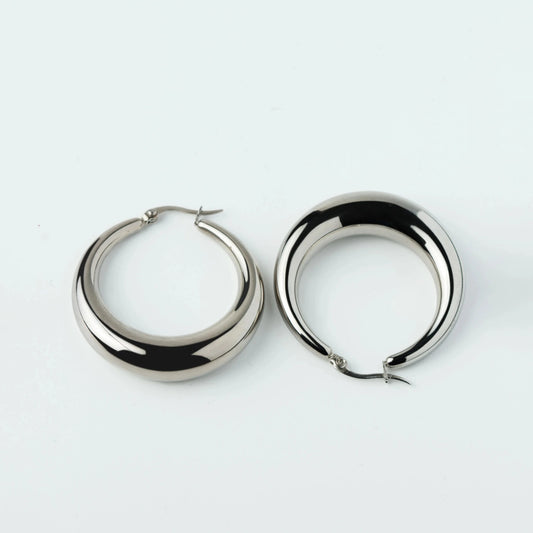
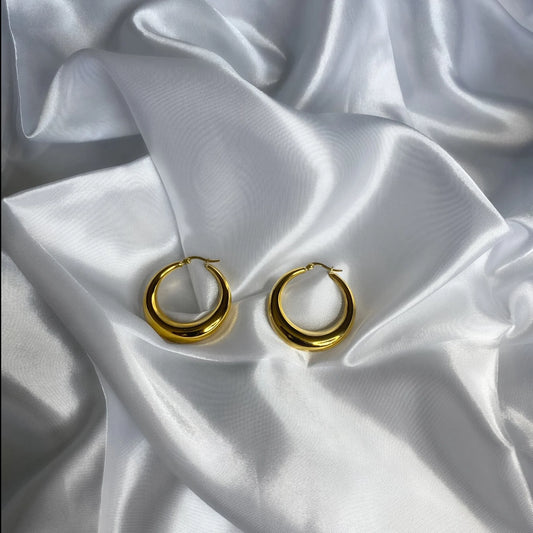
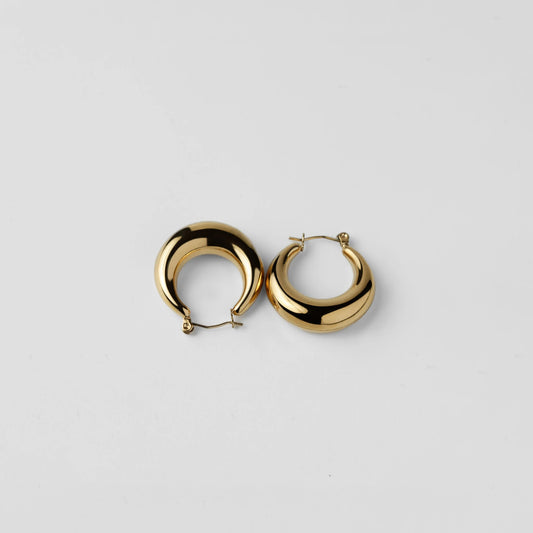
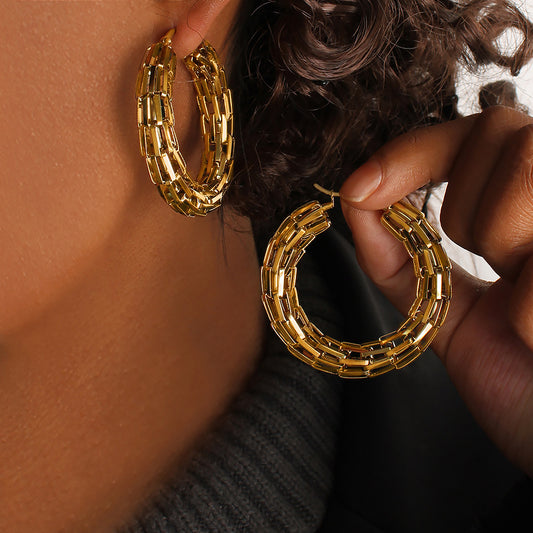
Gladiator Chunky Hoop Earrings from Areei
1. Mixed metals: The old rule of keeping gold with gold and silver with silver has been decisively abandoned. Gold hoops paired with silver studs, rose gold huggies alongside yellow gold rings intentional metal mixing adds dimension and gives a stack a collected, personal quality rather than a just-purchased feel.
2. Asymmetrical stacks: Your left and right ears do not need to match. In 2026, asymmetry is not an error it is a design choice. Wearing a bolder, more maximalist stack on one ear while keeping the opposite side minimal creates a sophisticated, intentional contrast.
3. Sculptural ear cuffs: Ear cuffs are having a major resurgence, and this time they are bigger and bolder. Modern takes incorporate sharp silhouettes, chunky proportions, and geometric forms, working beautifully whether layered over piercings or worn on their own.
4. Intentional negative space: More is not always more. The 2026 approach favours breathing room between pieces, letting each earring stand on its own before the eye moves to the next. A considered, spaced-out stack communicates confidence and restraint in equal measure.
5. Colour and gemstones: Coloured gemstones are finding their way into ear stacks in a meaningful way. Garnet huggies, ruby hoops, and sapphire studs inject personality without overwhelming. Semi-precious crystals offer accessible ways to bring colour into a stack at a range of price points.
6. Generational mixing: Pairing inherited or vintage pieces a grandmother's pearl stud, an antique gold ring with contemporary investment buys is one of the most personal ways to build a stack. It reflects a broader jewellery movement towards pieces that feel collected, not purchased as a set.
Choosing the Right Earring Shapes for Stacking
Not all earring shapes lend themselves equally well to stacking. Here is a guide to the most versatile forms and how they work within a composed ear.

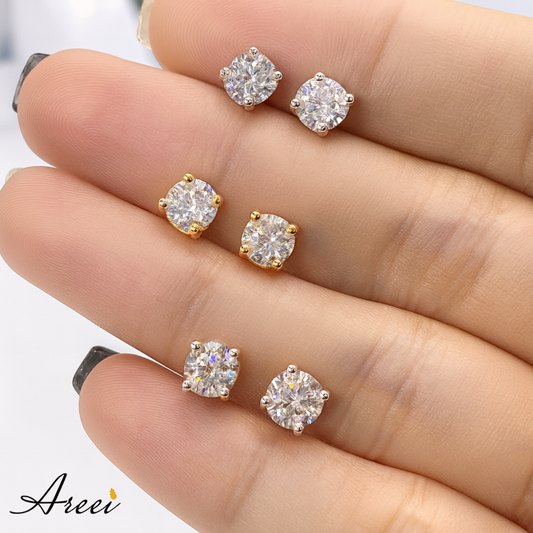
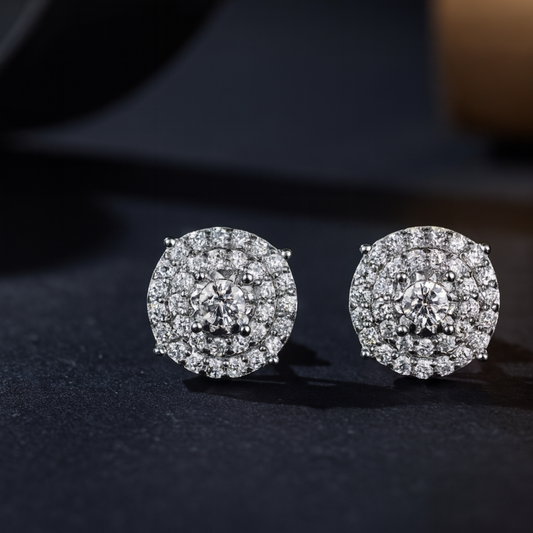
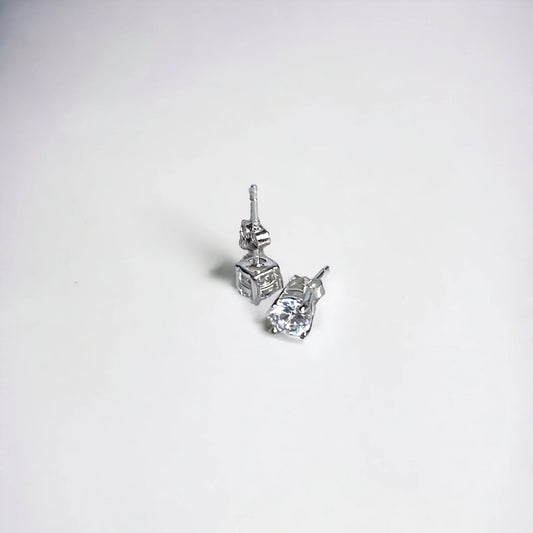
Micro Diamond Stud Earrings from Areei
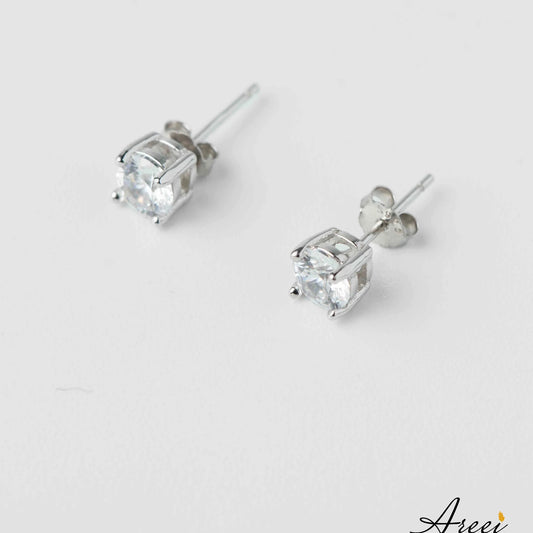
Studs are the backbone of almost every ear stack. They sit close to the ear and provide a clean, unobtrusive base that lets other pieces do the work. Flat-back studs (also known as threadless or push-in studs) are generally preferable to butterfly backs for stacking, as they sit more flush and are more comfortable when multiple piercings are close together.

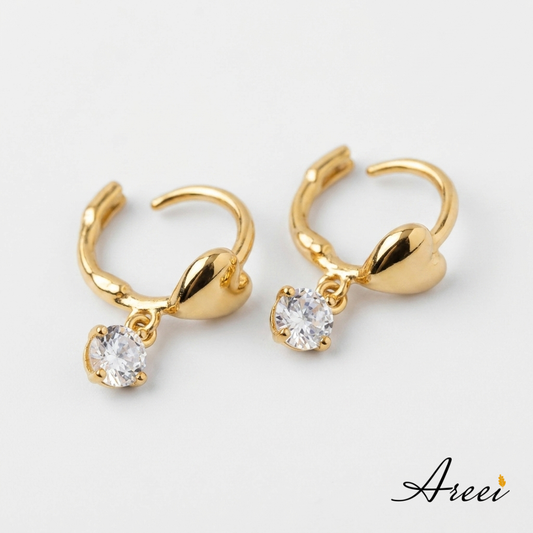
Mobius Micro Huggie Earrings from Areei
Huggies are small, hoop-style earrings that sit snugly against the lobe or cartilage. Their compact form means they layer beautifully in different sizes and finishes, adding dimension without taking up much visual space. They work particularly well in the second and third lobe positions.

Hoops anchor a stack and give it movement. The key is scale: a medium hoop in the first lobe position provides a focal point without overpowering the more delicate pieces above it. In 2026, graduated and inside-out diamond hoops are particularly prominent, offering brilliance from every angle.

Tassel Drop Earring from Areei
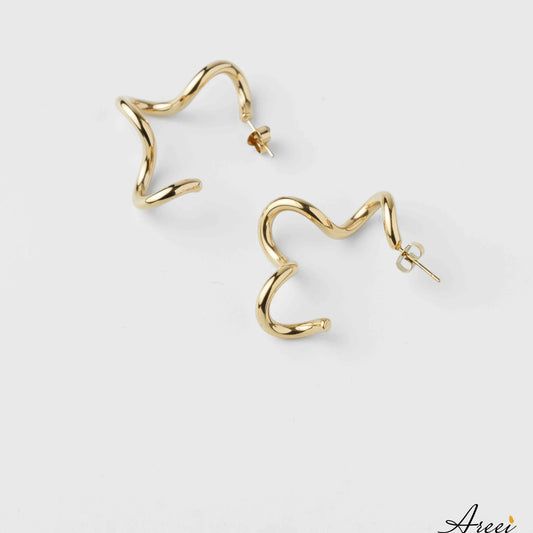
Climbers and crawlers are designed to appear to travel upwards along the ear, following its natural curve. A single crawler in the lobe can span the visual range of two or three separate piercings, making them ideal for those who want a stacked look without committing to multiple cartilage piercings.
Caring for Your Ear Stack
New piercings. Follow your piercer's aftercare instructions precisely. For cartilage piercings, expect a healing period of between six and twelve months. Clean the piercing twice daily with a sterile saline spray, avoid touching it with unwashed hands, and do not change the jewellery until the piercing is fully healed. Sleeping on a travel pillow with a hole in the centre can significantly reduce irritation for helix and cartilage piercings.
Cleaning your jewellery. Remove earrings before showering, swimming, or exercising wherever possible. To clean solid gold or silver pieces, a gentle soak in warm water with a small amount of washing-up liquid, followed by a soft brush and a thorough rinse, is usually sufficient. Dry thoroughly before storing or wearing. For pieces with gemstones, check the stone's care requirements first, as some such as opals and emeralds require more cautious handling.
Storage. Store earrings individually or in compartmentalised jewellery boxes to prevent scratching. Keep silver pieces in anti-tarnish pouches or lined boxes when not in use.
Frequently Asked Questions
How many piercings do you need for an ear stack? There is no minimum number. Even two lobe piercings can form the basis of a beautiful stack when styled thoughtfully. Most people find that three to five piercings across the lobe and lower cartilage gives them sufficient flexibility to create a layered look without requiring significant commitment.
Can you build an ear stack without getting new piercings? Absolutely. Ear cuffs, which grip the cartilage without requiring a piercing, are widely available and incredibly versatile. A combination of lobe piercings and well-chosen cuffs can create a convincingly stacked look without any additional needles.
Is it safe to mix different metals in an ear stack? For healed piercings, mixing metals is entirely safe and is in fact one of the defining stylistic choices of contemporary ear stacking. For unhealed piercings, always use implant-grade metals such as ASTM F136 titanium, solid gold (14ct or above), or implant-grade surgical steel to minimise the risk of irritation or reaction.
How do you decide which ear to stack more heavily? There are no rules. Many people choose to stack more heavily on their dominant side simply because it is more visible in day-to-day interactions, but the trend for asymmetrical stacks means that deliberate imbalance is very much accepted. Experiment with both approaches and see which feels most natural to you.
What is the difference between an ear stack and a curated ear? The terms are often used interchangeably. "Curated ear" tends to imply a more considered, fine-jewellery-oriented approach, often involving a professional jewellery consultation to plan piercing placement and earring selection. "Ear stack" is a broader term that encompasses any deliberate layering of multiple earrings, regardless of price point or degree of planning.
How long does it take to build an ear stack? For a fully realised stack involving multiple cartilage piercings, allow at least one to two years. This gives each piercing time to heal fully before adding the next, and allows your aesthetic to evolve gradually rather than rushing decisions you may later regret.