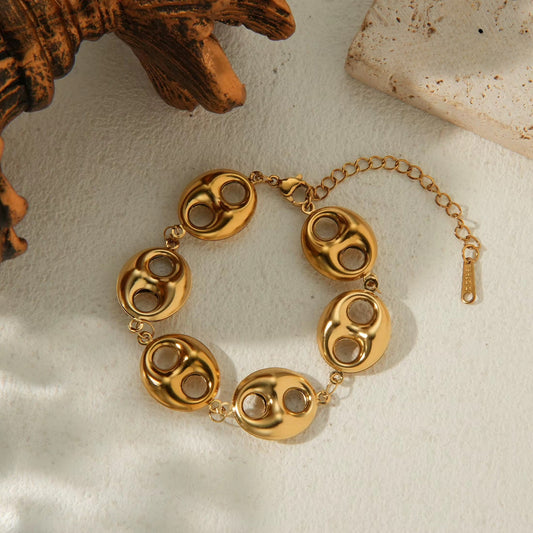
Copper bracelets are one of the oldest "natural remedies" still sold today, and one of the most heavily marketed. Sellers claim they ease arthritis pain, reduce inflammation, boost circulation, increase energy, detoxify the body and even slow ageing. Millions of people wear one. Many swear it helps.
So does the science back any of that up? We looked at the clinical trials, the proposed mechanisms, and the most common claims one by one, so you can make an informed decision rather than relying on marketing copy.
What are copper bracelets actually claimed to do?
Sellers and proponents tend to make a similar cluster of claims, often regardless of the specific product:
- Arthritis and joint pain relief: This is by far the most common claim, covering both osteoarthritis and rheumatoid arthritis.
- Reduced inflammation: Often framed as copper "correcting" an inflammatory imbalance in the joints.
- Improved circulation: Based on the idea that copper plays a role in blood vessel health.
- More energy, better mood or "balanced energy field": Often paired with claims about "negative ions" or magnetism, especially in hybrid copper-and-magnet bracelets.
- Detoxification: The idea that copper helps the body flush out toxins.
- Immune support: Borrowing from copper's genuine antimicrobial properties as a metal surface.
- Anti-ageing or general wellbeing: A vaguer catch-all claim found on many product pages.
Nearly all of these trace back to one underlying theory: that copper from the bracelet is absorbed through the skin and acts inside the body. As you will see below, this theory has been tested directly, and it does not hold up.
Some pieces are made to be noticed. Others are made to be worn every single day. Our Bracelet collection covers both, with designs that suit your morning coffee run as easily as your evening plans. Check it out
The clinical trial evidence
The early study proponents still cite (1976)
Sellers frequently point to a 1976 study by Walker and Keats, which is often described as the original scientific support for copper bracelets. In that study, a group of arthritis sufferers wore copper bracelets and aluminium placebo bracelets, with weight changes in the bracelets recorded as evidence of "skin absorption" of copper, and a notable number of participants reported feeling better.
The trouble is that this study had serious limitations by modern research standards: a high dropout rate, reliance on subjective patient questionnaires rather than objective measures of inflammation, and a lack of the rigorous blinding that later trials used. It is essentially a preliminary, decades-old pilot study, not the kind of robust evidence that would normally be used to recommend a treatment.
The robust randomised trials (2009 and 2013)
Much stronger evidence came later, from a research team based at the University of York, who ran two well-designed randomised, double-blind, placebo-controlled crossover trials, the gold standard for testing whether a treatment works beyond the placebo effect.
|
Trial |
Condition tested |
Design |
Result |
|
Richmond et al., 2009 (Rheumatology) |
Osteoarthritis |
Randomised, placebo-controlled crossover; participants wore magnetic and copper bracelets plus controls |
No meaningful improvement in pain, stiffness or physical function beyond placebo |
|
Richmond et al., 2013 (PLOS ONE) |
Rheumatoid arthritis |
Randomised, double-blind, placebo-controlled crossover; 70 patients wore four different devices, including a real copper bracelet, for five weeks each |
No statistically significant difference between the copper bracelet and control devices on pain, swelling, blood markers of inflammation or physical function |
In the 2013 trial, researchers set a clear benchmark in advance: a device would only be considered clinically useful if it produced at least a 20 per cent improvement in tender and swollen joints. None of the devices tested, including the copper bracelet, reached that threshold.
These two trials are widely regarded as the most rigorous tests of copper bracelets to date, and their conclusion has been echoed by major patient organisations, including the US based Arthritis Foundation, which states plainly that magnet therapy and copper jewellery have not been shown to ease arthritis pain or stiffness in published research.

Why do so many people genuinely feel better wearing one?
This is the part most articles on this topic skip, and it matters, because the people reporting relief are not lying or imagining it.
The lead researcher on the York trials, Dr Stewart Richmond, offered two main explanations for why people perceive a benefit even when trials show none:
- The placebo effect is real: Believing a treatment will help can genuinely change how pain is experienced, even when there is no direct physical mechanism at work. This is a well-documented effect in pain research generally, not something specific to copper.
- Natural symptom fluctuation gets misattributed: Conditions such as rheumatoid arthritis and osteoarthritis naturally flare up and settle down over time. People often start wearing a bracelet during a bad flare-up, then notice improvement as the flare-up subsides on its own, and credit the bracelet rather than the natural course of their condition.
Both explanations are consistent with what trials find when proper blinding and a control group are used: people often report feeling better on every device they are given, including the fake one, which is exactly the pattern you would expect from expectation and natural variation rather than a true treatment effect.
Find a bracelet that is truly yours. Our collection is crafted with care, blending timeless materials with designs made for everyday wear. Shop the collection now.
Can copper actually be absorbed through the skin?
The mechanism behind almost every copper bracelet claim is dermal absorption: the idea that copper leaches off the metal, passes through the skin, and acts inside the joints or bloodstream.
This is where the famous green or blue stain often left on the skin under a copper bracelet comes in. Sellers sometimes present this stain as proof that copper is being absorbed and "working." The chemistry tells a different story. Sweat, skin oils, and moisture in the air react with the surface of the copper to form copper salts, such as copper carbonate or copper chloride. This is the same chemical process (oxidation) that turns old copper coins, statues, and roofing green over time, commonly known as verdigris or patina.
That green mark sits on the surface of the skin. It washes off with soap and water, does not indicate an allergic reaction, and there is no good evidence that it reflects copper being absorbed in any clinically meaningful amount into the bloodstream or joints. Dermatologists generally describe it as a cosmetic curiosity rather than a sign of treatment taking effect.
It is worth separating this from a genuinely important fact: copper is an essential trace mineral, and the body does need a small amount of it, obtained through food such as shellfish, nuts, seeds, whole grains and dark chocolate. Most people already get enough copper this way. There is no evidence that a copper deficiency causes arthritis, nor that wearing a bracelet corrects one.
What about the other claims: energy, detox, negative ions, immune support?
"Negative ions" and energy claims: These claims usually originate from the magnetic and "ionic" jewellery world rather than copper specifically, and they are frequently bundled into copper bracelet marketing anyway. Independent reviews of "negative ion" jewellery have found that the ion output of these products is negligible, and there is no quality clinical research showing that wearing such a bracelet changes a person's energy levels or mood.
Detoxification: The body already has a highly effective detoxification system, namely the liver and kidneys. There is no physiological pathway by which a metal bracelet sitting on the wrist would pull toxins out of the body, and no credible study has shown this effect.
Improved circulation: No trial has demonstrated that copper bracelets measurably change blood flow. This claim appears to be an extension of the unproven "copper deficiency causes circulation problems" idea rather than anything tested directly.
Antimicrobial or immune benefits: This is the one claim with a genuine kernel of truth behind it, just not in the way it is marketed. Copper surfaces do have well-documented antimicrobial properties, which is why copper and copper alloys are increasingly used on door handles and surfaces in hospitals to reduce the spread of bacteria. That property applies to copper killing microbes on contact with a surface. It does not translate into a bracelet boosting your internal immune system, which is a completely different biological process.

Are copper bracelets safe to wear?
For most people, yes, copper bracelets are low risk. The main practical considerations are:
- Skin discolouration: Harmless, cosmetic, and easily washed off, though some people find it annoying or embarrassing.
- Nickel allergy: Cheaper bracelets are sometimes made from copper alloys that include nickel, which can cause genuine allergic contact dermatitis (redness, itching, swelling) in people who are sensitive to it. This is unrelated to the green-stain reaction and worth checking if you have a known metal allergy.
- Wilson's disease: This is a rare inherited condition that affects how the body processes copper. People with this condition, or anyone advised by a doctor to monitor their copper intake, should be cautious about any product marketed as increasing copper exposure and should seek medical advice first.
- Delayed or replaced treatment: The most significant real-world risk is not physical. It is the possibility that someone with rheumatoid arthritis, osteoarthritis, or another condition relies on a copper bracelet instead of seeking or continuing evidence-based treatment, which can allow a condition to progress unmanaged.
From everyday staples to something a little more special, our Bracelet collection has it all. Each design is chosen for quality as much as style. Take a look!!!
Should you still wear one?
If you enjoy the look of copper jewellery, there is no strong reason not to wear it. As an accessory, it is inexpensive, generally safe, and for some people the ritual of wearing it may offer genuine comfort through the placebo effect, which, while not a cure, is not nothing either.
What copper bracelets should not do is replace proper medical care. If you have arthritis or another chronic pain condition, the evidence-based options, such as prescribed medication, physiotherapy, exercise programmes tailored to joint health, and in some cases dietary changes like increased omega-3 intake, have considerably stronger research behind them than any copper bracelet. A copper bracelet can sit alongside those treatments as a harmless personal choice. It should not sit in place of them.
Frequently asked questions
Do copper bracelets work for arthritis? The best available evidence, including two randomised, double-blind, placebo-controlled trials, found no meaningful benefit for arthritis pain, stiffness, swelling or inflammation beyond what a placebo bracelet provided.
Why do copper bracelets turn skin green, and is that dangerous? The green or blue mark is caused by copper reacting with sweat and air to form harmless copper salts on the surface of the skin, similar to the patina seen on old copper coins. It is cosmetic, not a sign of toxicity or that the bracelet is "working."
Is there a more effective or "real" type of copper bracelet? No. The randomised trials tested genuine, solid copper bracelets, not cheap imitations, and still found no specific therapeutic effect. There is no evidence that a particular thickness, purity or design of copper bracelet changes this outcome.
Can the body absorb copper from a bracelet? There is no good evidence that clinically meaningful amounts of copper pass through intact skin into the bloodstream from a bracelet. The body obtains the small amount of copper it needs from food.
Are copper bracelets a scam? "Scam" may be too strong a word for a cheap, harmless accessory, but many of the specific health claims attached to them (curing arthritis, detoxifying the body, boosting energy through "negative ions") are not supported by quality scientific evidence and should be treated with healthy scepticism.
The bottom line
Copper bracelets are an old idea that has been tested with modern, rigorous science, and the science has not been kind to the marketing claims. The most reliable trials show no measurable benefit for arthritis or inflammation beyond a placebo effect, there is no solid evidence of meaningful copper absorption through the skin, and claims around detox, energy and "negative ions" remain unproven. The green skin mark people sometimes worry about is a harmless chemical reaction, not evidence of anything therapeutic happening.
None of this means people who feel better while wearing one are wrong about their own experience. It simply means that experience is best explained by the placebo effect and the natural ups and downs of chronic conditions, rather than by copper itself doing anything inside the body. Wearing one is a low-risk personal choice. Treating it as a substitute for proven medical care is not advisable.
This article is for general information only and is not a substitute for personalised medical advice. Anyone with arthritis or another health condition should speak to a doctor or rheumatologist about evidence-based treatment options.